
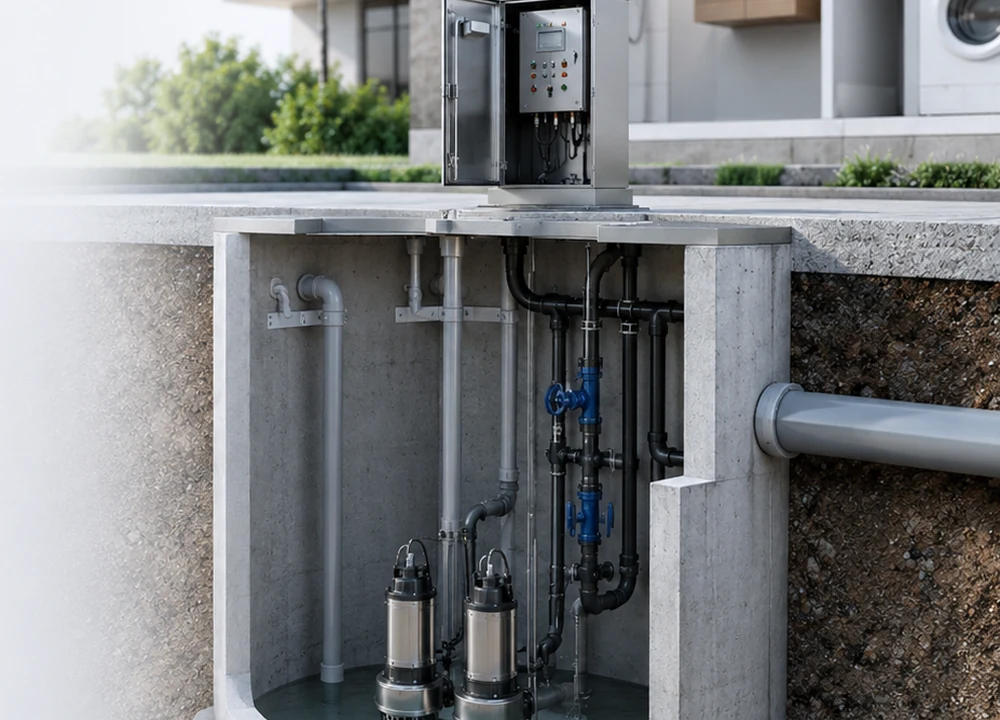
A planned service should test pump operation, floats, alarms and controls; inspect valves, guide rails, discharge pipework and chamber condition; and leave clear recommendations. The interval depends on site use, loading, equipment condition and the consequence of failure.
What good pump station servicing should include
A pump station service should be more than a quick visual check. It should look at pump operation, current draw where appropriate, float switching, alarm activation, non-return valve performance, discharge pipework, guide rails, chamber condition, excessive solids, signs of fat or wipes and whether the system is easy to maintain safely.
Why planned maintenance matters
Sewage pump stations often fail when small issues are ignored: floats become fouled, valves seize, pumps run hot, chambers accumulate debris, alarms are missed or control panels begin to fail. Regular servicing gives you a chance to deal with those issues before they become emergency callouts.
- Pump operation and duty/standby sequencing
- Float switch and alarm checks
- Valve, guide rail and pipework inspection
- Chamber condition and debris review
- Recommendations for repair or refurbishment
- Maintenance records for property managers and facilities teams
Maintenance frequency
The right service interval depends on the site type, number of users, duty, pump station age, fats/wipes risk, commercial use and consequence of failure. Domestic systems may need periodic planned servicing, while commercial, care, apartment and high-risk sites often need more regular planned maintenance.
What you need after a service visit
A useful service record should identify the station, pumps and controls checked, explain visible defects or risks, distinguish urgent work from planned improvements and give the owner or facilities team a clear maintenance trail. Where repair, refurbishment or replacement is recommended, the reason should be tied to the observed condition rather than a generic upgrade list.
Domestic, commercial and multi-site servicing
Domestic owners normally need a clear condition summary and practical maintenance advice. Commercial, apartment, care and managed sites may also need asset references, duty/standby results, access notes, operating-risk priorities and consistent records across more than one station. Service-contract requirements can be reviewed separately from a single planned visit.
Checking coverage for a UK site
Send the site postcode, pump count, last service date, control-panel photos, alarm details and any access restrictions. The appropriate service route and practical attendance coverage can then be confirmed for that site rather than assumed from a UK search term.
How we can help
- Planned maintenance visits
- Domestic and commercial servicing
- Pump and float testing
- Alarm and control checks
- Written recommendations