
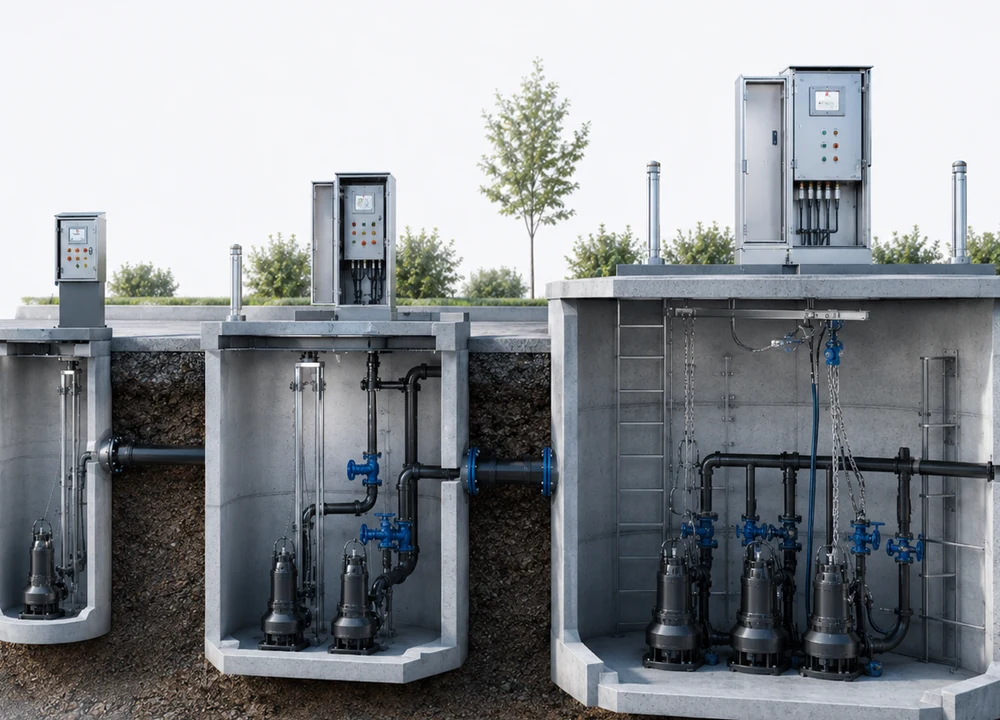
Types of Pump Stations support is handled around the actual pump station arrangement: chamber type, pumped material, pump duty, controls, alarms, valves, rising main, access, ground conditions and whether the work is repair, servicing, refurbishment, replacement or new installation.
Pump stations by use
Pump stations can be grouped by what they pump and where they are used. The main categories include foul sewage pump stations, grey water pump stations, surface water pump stations, storm water pump stations, rainwater lifting stations, basement pump stations, domestic pump stations, commercial pump stations, developer pump stations and adoptable pump stations.
Pump stations by construction
Pump stations can also be grouped by chamber construction. Common options include GRP package pump stations, thick wall HDPE pump stations, precast concrete ring pump stations, site-built concrete chambers and smaller polyethylene or plastic domestic chambers. The correct choice depends on depth, loading, access, groundwater, buoyancy risk and expected service life.
Pump stations by duty
The duty arrangement may be single pump, twin pump duty/standby, duty assist, vortex pump, grinder pump, macerator pump, surface water pump, submersible sewage pump or a dry/wet well arrangement. The duty must be matched to flow, head, solids, storage and reliability requirements.
Practical pump station guidance
This page answers the practical questions people ask before they call: what the pump station is used for, what can fail, what details are needed, how the equipment and civil scope split, and when the likely route is repair, servicing, refurbishment, replacement or installation.
How we can help
- Package pump stations
- Micro pump stations
- Domestic pump stations
- Commercial pump stations
- Developer and adoptable pump stations
- GRP, HDPE and concrete ring pump stations
- Surface water, grey water and foul sewage systems
- Single and twin pump arrangements