
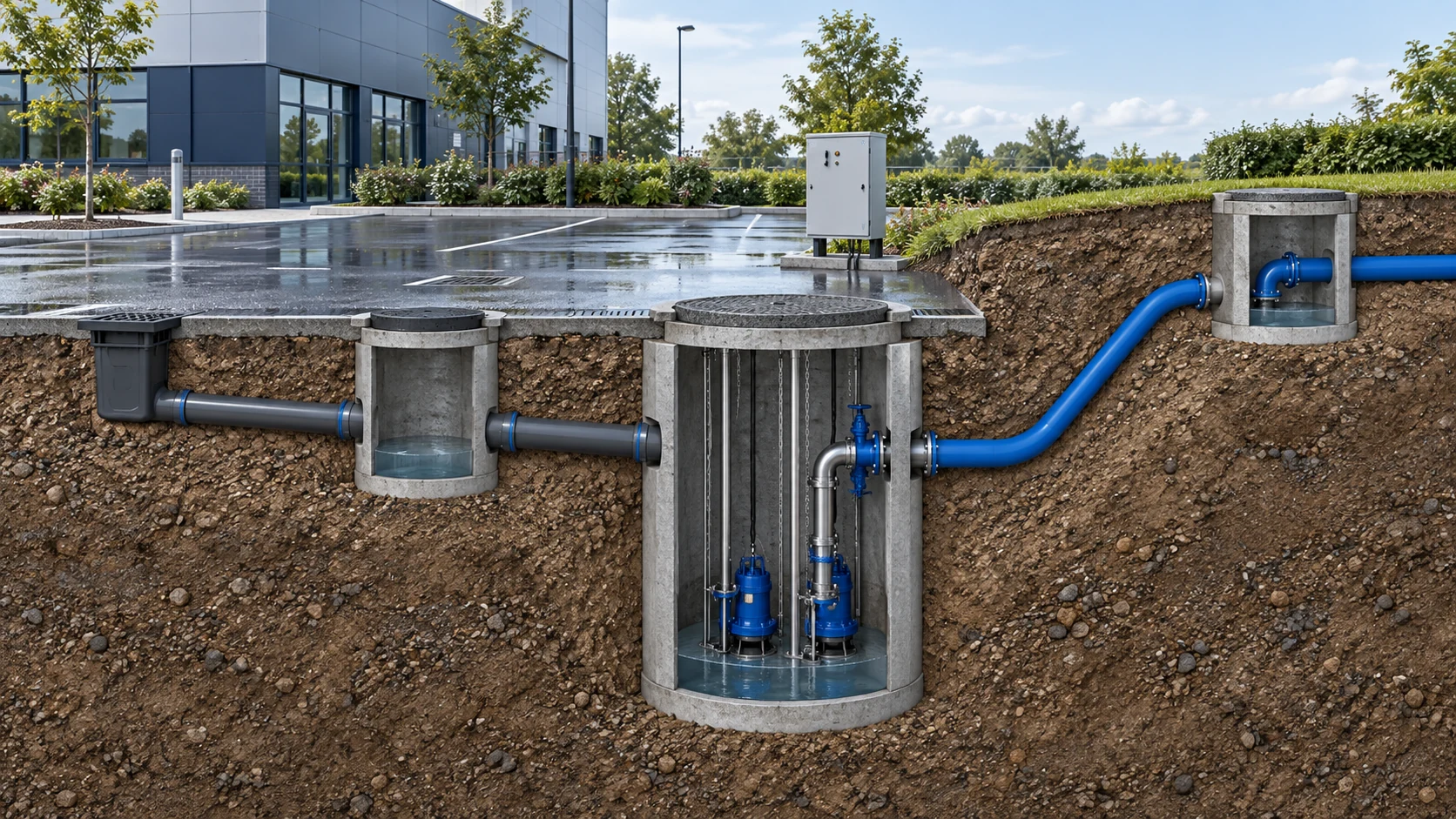
Surface Water Pump Stations support is handled around the actual pump station arrangement: chamber type, pumped material, pump duty, controls, alarms, valves, rising main, access, ground conditions and whether the work is repair, servicing, refurbishment, replacement or new installation.
Different from foul sewage pumping
Surface water pump stations usually do not need the same solids handling as foul sewage stations, but they may need higher flow capacity, storm storage, reliable level control and consideration of intense rainfall. Pump duty and chamber volume need to be selected around realistic inflow.
Typical applications
Surface water pumping can be required for car parks, yards, basements, low-level drainage, attenuation systems, soakaway discharge constraints, flood-prone areas and sites where the outfall is above the collection level.
- Storm water pump stations
- Rainwater lifting stations
- Basement and yard drainage
- Surface water attenuation discharge
- Clean water pumping systems
- Flood risk and high rainfall applications
Civil works and discharge route
The pump station is only one part of the system. The discharge route, rising main, non-return valves, valves, outfall, electrical controls and maintenance access all need to be considered. Alton Facility Services can support civils where excavation and drainage installation are required.
Practical pump station guidance
This page answers the practical questions people ask before they call: what the pump station is used for, what can fail, what details are needed, how the equipment and civil scope split, and when the likely route is repair, servicing, refurbishment, replacement or installation.
How we can help
- Storm water pump station support
- Rainwater and clean water pumping
- Level controls and alarms
- Rising main and outfall checks
- Civil installation support where required