
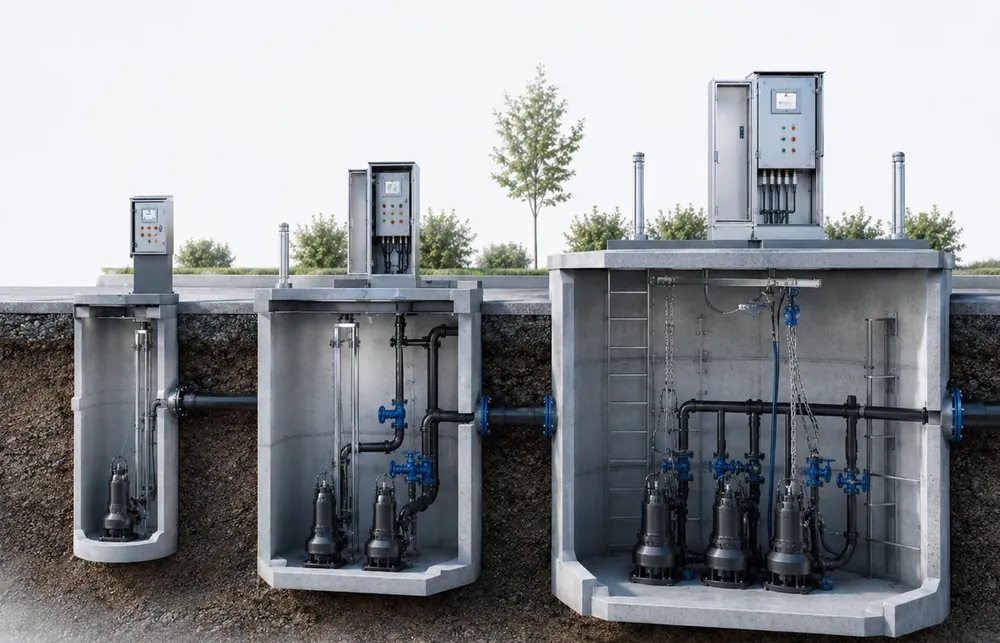
Pump station sizing depends on how much liquid arrives, how far and how high it must be pumped, how much storage is needed, and how reliable the system must be.
Core sizing factors
The main sizing factors are incoming flow, static lift, total dynamic head, rising main length, pipe diameter, fittings, valve losses, required storage, chamber diameter, pump start and stop levels, emergency storage, solids handling and available electrical supply.
Why undersizing causes problems
An undersized pump station can surcharge, alarm, trip, short cycle, block, fail to empty or overload the pumps. A chamber with inadequate storage can leave very little response time during pump failure, especially on commercial, care home, apartment block or developer sites.
Why oversizing also matters
Oversizing can also create problems. Pumps that are too large for the rising main can cause hydraulic issues, excessive cycling, poor control, noise, energy waste or unnecessary cost. The right selection should match real flow, head and system duty.
How we can help
- Flow and head checks
- Chamber volume and storage review
- Single or twin pump selection
- Duty standby requirements
- Rising main sizing considerations
- Pump curve and control philosophy review