
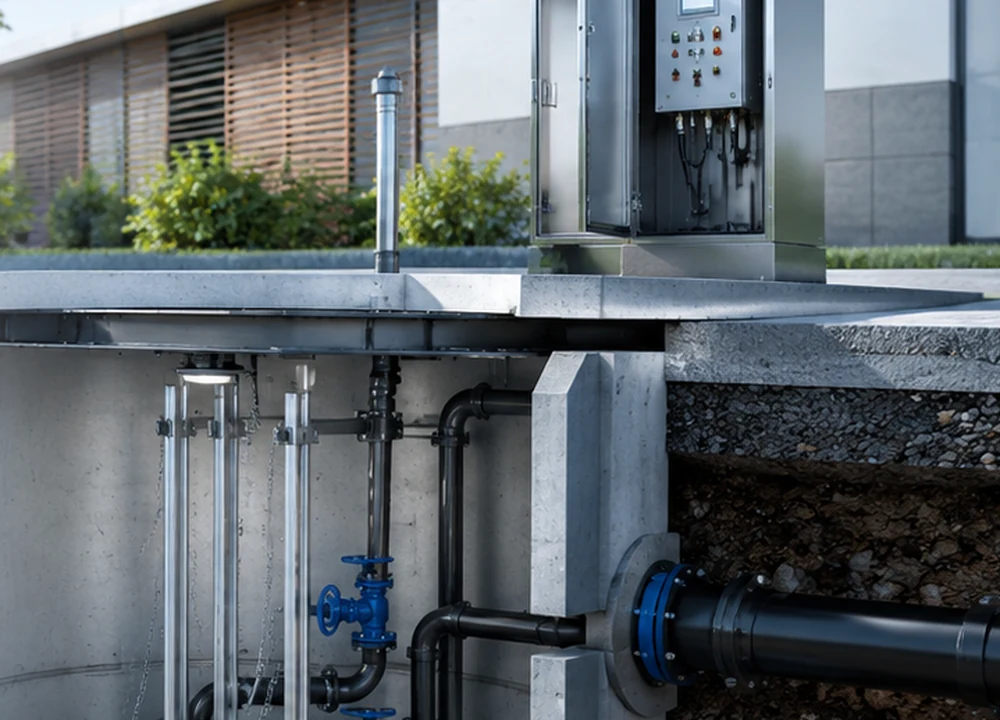
Repair starts with the symptom and a safe review of the pump, floats, controls, alarms, valves, discharge pipework, rising main and incoming drainage. Send the postcode, alarm message and clear photos so the likely fault and practical attendance route can be assessed.
Pump station repair starts with the symptom
A high level alarm, a pump tripping electrics, a chamber not emptying, a pump running constantly and a foul smell problem can all have different causes. The repair approach should identify whether the fault sits with the pump, float switches, control panel, non-return valve, isolation valve, pipework, rising main, incoming drainage or power supply.
Common repair items
Pump station repair work can include clearing blocked pumps, replacing failed pumps, renewing floats, repairing control panels, changing non-return valves, replacing guide rails, fixing discharge pipework, testing the rising main and improving alarm arrangements.
- Blocked or jammed sewage pumps
- Failed pump motor or seal faults
- Float switch replacement
- Control panel diagnosis
- Non-return valve and isolation valve problems
- Rising main blockage or air lock investigation
Repair, refurbishment or replacement
The best repair is not always the cheapest immediate fix. Where the chamber is unsafe, pumps are repeatedly failing, controls are obsolete or access is poor, refurbishment or replacement may be more reliable than repeated reactive repairs.
What to send for repair triage
Send the site postcode, the alarm or control-panel message, photos of the panel and chamber, pump model labels where accessible, the visible symptoms and whether sewage is backing up. Do not enter a chamber or remove electrical covers. These details help separate a pump, float, control, valve, pipework or incoming-drainage fault before attendance is planned.
UK repair enquiries and attendance coverage
Repair enquiries can be reviewed from the site information first. The practical attendance route, urgency and coverage are then confirmed from the postcode, system condition and operating impact. This avoids promising a response time or attendance before the real fault and location are known.
Practical pump station guidance
This page answers the practical questions people ask before they call: what the pump station is used for, what can fail, what details are needed, how the equipment and civil scope split, and when the likely route is repair, servicing, refurbishment, replacement or installation.
How we can help
- Emergency pump station fault diagnosis
- Pump, float, valve and panel repair
- High level alarm response
- Repair versus replacement advice
- Ongoing servicing after repair