
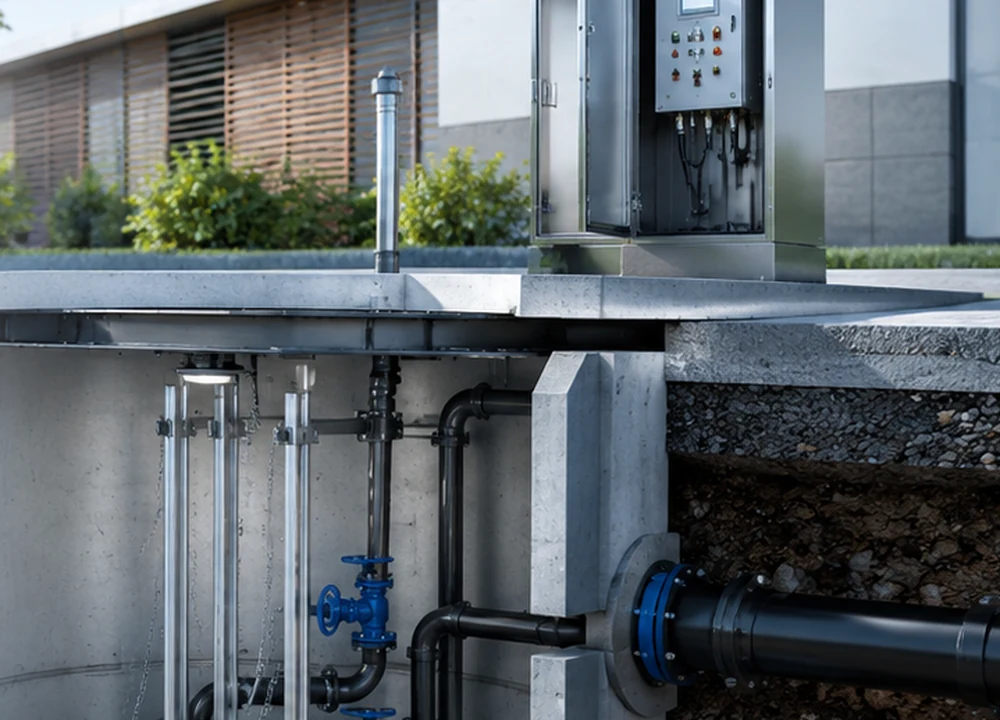
Pump Station Fault Finding support is handled around the actual pump station arrangement: chamber type, pumped material, pump duty, controls, alarms, valves, rising main, access, ground conditions and whether the work is repair, servicing, refurbishment, replacement or new installation.
Likely causes
Practical diagnosis for sewage pump stations with alarms, pump failure, loss of service, tripping electrics, blocked pumps, faulty floats or control panel problems. The diagnosis should separate pump faults from control faults, chamber faults and discharge pipework problems. A structured check avoids replacing a pump when the real issue is a float, valve, panel or rising main fault.
- high level alarms
- pumps not running
- pump running but chamber not emptying
- tripping electrics
- float switch faults
- control panel faults
- blocked pump or valve
- rising main restrictions
What to do first
Keep clear of chambers, wet electrical equipment and live control panels. Do not enter a confined space. Reduce water use where possible if the chamber level is rising, then send photos of the control panel, chamber, pumps, alarm display and any visible labels. For urgent loss of service, call the pump station engineers directly.
What Alton Pumps can check
Our engineers can review the pumps, float switches, control panel, valves, guide rails, non-return valves, discharge pipework, chamber condition and rising main symptoms before advising on repair, refurbishment or replacement.
Practical pump station guidance
This page answers the practical questions people ask before they call: what the pump station is used for, what can fail, what details are needed, how the equipment and civil scope split, and when the likely route is repair, servicing, refurbishment, replacement or installation.
How we can help
- high level alarms
- pumps not running
- pump running but chamber not emptying
- tripping electrics
- float switch faults
- control panel faults
- blocked pump or valve
- rising main restrictions