
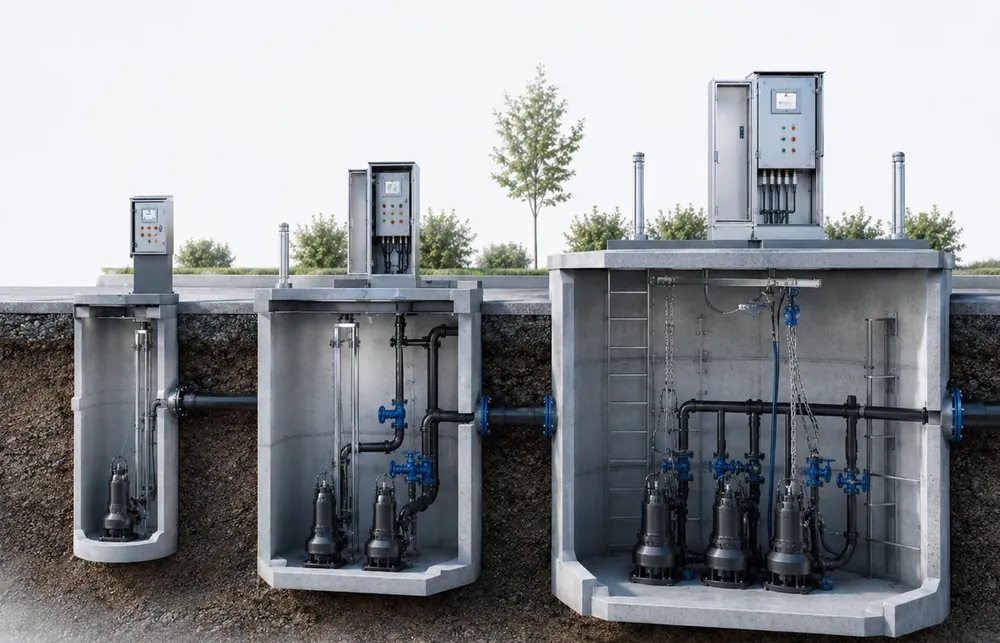
A reliable pump station starts with the right design assumptions: flow rate, static head, friction loss, storage volume, solids handling, duty standby needs, chamber depth, access, controls, alarm strategy, rising main length and future maintenance access.
What design input should cover
Pump station design input should look beyond a pump catalogue selection. The site needs to consider incoming flow, peak discharge, available storage, pumped head, rising main diameter, friction losses, valve losses, solids handling, electrical supply, control philosophy, alarm response and maintenance access. For adoption or developer sites, access, emergency storage and handover requirements may be critical.
Pumping equipment and civil interface
Alton Pumps can advise on the pumping equipment, panels, floats, alarms, valves, guide rails and commissioning requirements. Alton Facility Services can support the civil interface if required, including chamber installation, bases, pipework, ducting, rising main trenches and reinstatement.
Good information avoids redesign
Useful design details include drainage layout, invert levels, proposed chamber depth, number of properties or fixture units served, pumped liquid, rising main length, discharge point, available power supply, cover loading and ground water risk. Early input is especially useful where there is a high water table, limited access or an adoption requirement.
How we can help
- Flow and head review
- Rising main and discharge point review
- Pump duty and standby philosophy
- Controls, floats and high level alarm advice
- Chamber material and access considerations
- Civil installation interface with AFS where required