
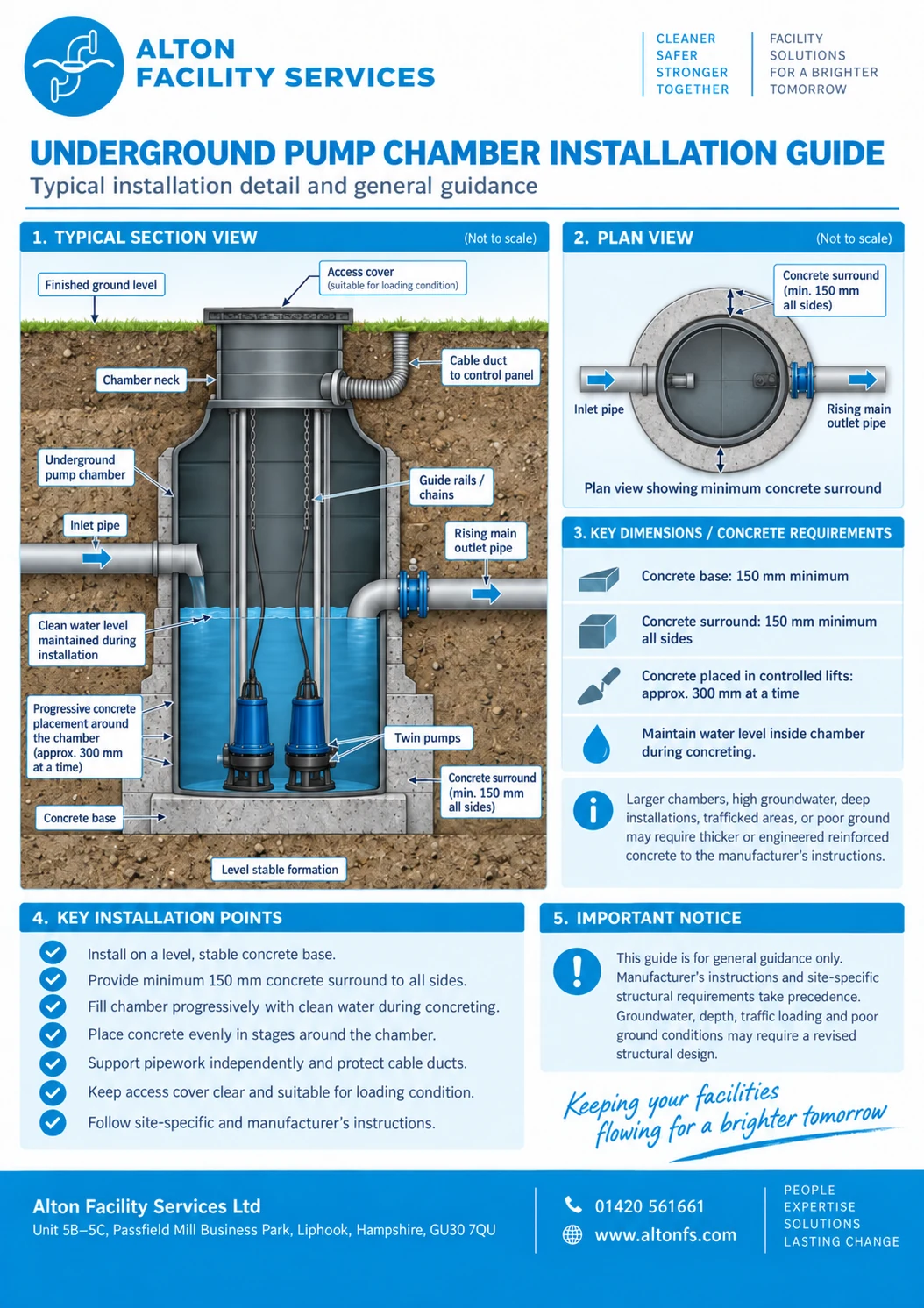
An underground pump chamber installation has to work as one system: chamber, pumps, controls, incoming drainage, rising main, cable route, access, ground conditions and future maintenance. This AFS guide is typical guidance only; the approved design, manufacturer instructions and site conditions take precedence.
What this installation guide covers
The guide shows the connected parts of a typical underground chamber: access cover, chamber neck, incoming drainage, guide rails, pumps, rising main outlet and cable route to the controls. It is a support aid for early discussion, site planning and quotation—not a construction drawing.
Site-specific checks come first
Before work starts, confirm the approved chamber, pump duty, inlet level, discharge route, cover loading, lifting plan, ground conditions, groundwater risk, access and utility information. Concrete, anti-floatation and structural requirements must be designed for the actual site and manufacturer instructions.
Pumps, controls and civils work together
Alton Pumps can support pump selection, guide rails, valves, non-return valves, floats, controls, alarms, commissioning, servicing and repair. Alton Facility Services can support excavation, chamber setting, pipework, ducting, rising-main trenches, backfill and reinstatement where required.
What to send before attendance
Useful information includes the site postcode, photographs of the chamber and control panel, pump model plates, alarm status, inlet depth if known, rising main route, discharge point, access restrictions, and whether the system handles foul sewage, grey water, surface water, rainwater or commercial wastewater.
How we can help
- Excavation and chamber setting
- Concrete base and anti-floatation support
- Drainage pipework and rising main trenches
- Backfill and reinstatement
- AFS support where required