
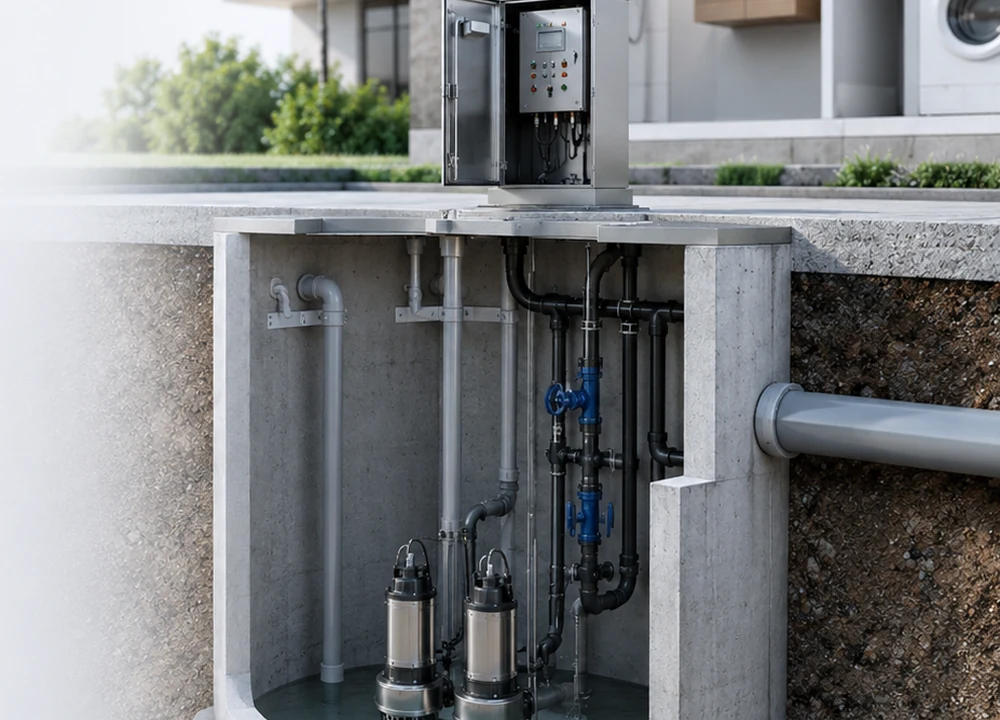
Pump station maintenance combines planned operational tests, condition inspection, cleaning needs, defect records and prioritised follow-up. The right interval depends on loading, site use, station design, equipment condition and the consequence of failure.
What a maintenance plan should achieve
A maintenance plan should reduce avoidable failures, show whether duty and standby equipment operates correctly, identify deterioration early and leave an understandable record. It should cover the station as a system rather than treating the pump as the only component.
Maintenance inspection points
A useful inspection considers pump operation, duty/standby sequencing, float movement, alarm operation, control-panel indications, valves, non-return valves, guide rails, discharge pipework, chamber condition and signs of ragging, grease, corrosion or unusual running.
- Pump operation and abnormal noise or vibration
- Float, level-control and alarm tests
- Valve, guide rail and discharge-pipe condition
- Chamber loading, debris, grease and corrosion
- Control-panel indications and electrical symptoms
- Safe access and future lifting requirements
What changes the maintenance interval
There is no reliable one-size-fits-all interval. Usage, occupancy, incoming solids, fat or wipe risk, station age, pump duty, chamber capacity, prior faults and the impact of failure all matter. Commercial, apartment, care and other critical sites may need more frequent attention than a lightly used private system.
Maintenance records and priorities
Record the station identity, visit date, pumps and controls checked, tests completed, defects observed and follow-up priority. Separate urgent operational risks from planned repairs and longer-term refurbishment so the owner can make a practical decision and compare condition across future visits.
When to request servicing or repair
This guide explains the maintenance principles. Use the sewage pump station servicing page to arrange a planned visit or discuss a recurring programme. Use the repair route when there is an alarm, loss of service, tripping, a pump not running or a chamber that is not emptying.
How we can help
- System-level maintenance planning
- Pump, float and alarm inspection points
- Condition and defect records
- Risk-based service intervals
- Clear servicing and repair routes