
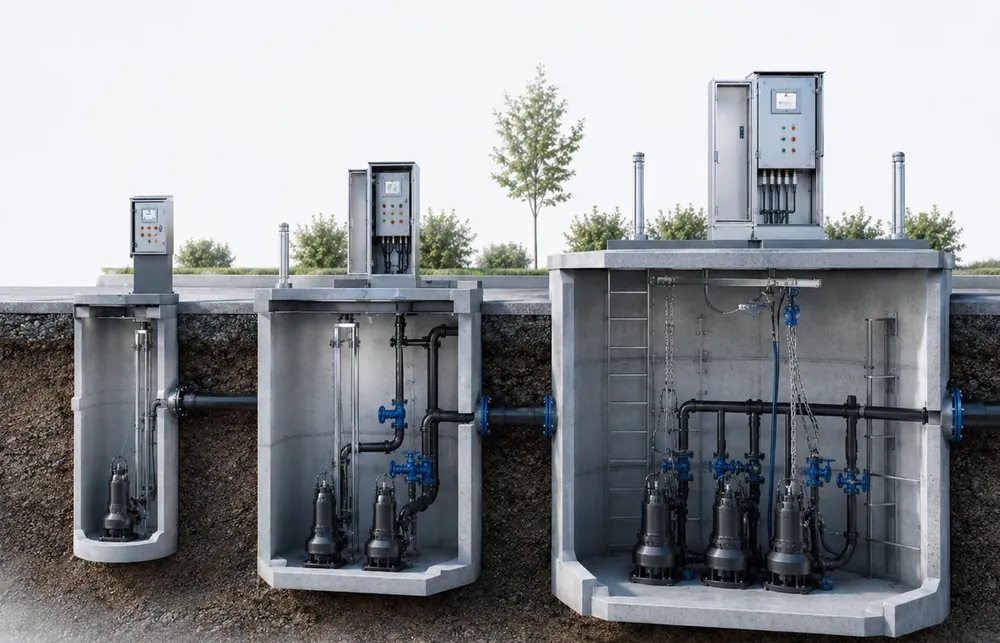
A useful pump station service contract defines the assets covered, planned visit scope, reporting, defect priorities and quotation route. Frequency should reflect use, loading, equipment condition and the operational consequence of failure.
Who planned service arrangements suit
A recurring service arrangement can suit facilities teams, managing agents, commercial premises, apartment blocks, care settings, estates and private owners who want maintenance planned rather than requested only after an alarm or failure.
Defining the assets and visit scope
The starting point is an asset list: site, station, chamber, pump count, pump models, control panel, alarm arrangement, valves and any known access or lifting constraints. The planned scope can then identify the operational tests, visible condition checks and records required at each visit.
- Station and equipment identification
- Pump and duty/standby operation checks
- Float, alarm and control checks
- Valve, guide rail and chamber inspection
- Condition findings and defect priorities
- Recommended repair or refurbishment actions
Reporting for commercial and managed sites
A service record should show what was checked, what was observed and which actions are urgent, planned or advisory. Consistent station names and asset references help facilities teams compare visits, manage approvals and understand whether repeated faults point towards repair, refurbishment or replacement.
Choosing a service frequency
Frequency depends on occupancy, pump duty, chamber loading, fats or rag risk, station age, prior failures and how disruptive loss of service would be. The interval should be reviewed when the use, equipment or condition changes rather than copied unchanged between unrelated sites.
Information for a service-contract quotation
Send the site postcode, number of stations, pump and control-panel details, the last available service records, known faults, access restrictions and the reporting needs of the owner or facilities team. For multiple sites, provide a simple asset list so the scope can be reviewed consistently.
How we can help
- Scheduled pump station inspections
- Commercial and managed-site planning
- Defined assets and visit scope
- Condition and defect reporting
- Prioritised repair recommendations