
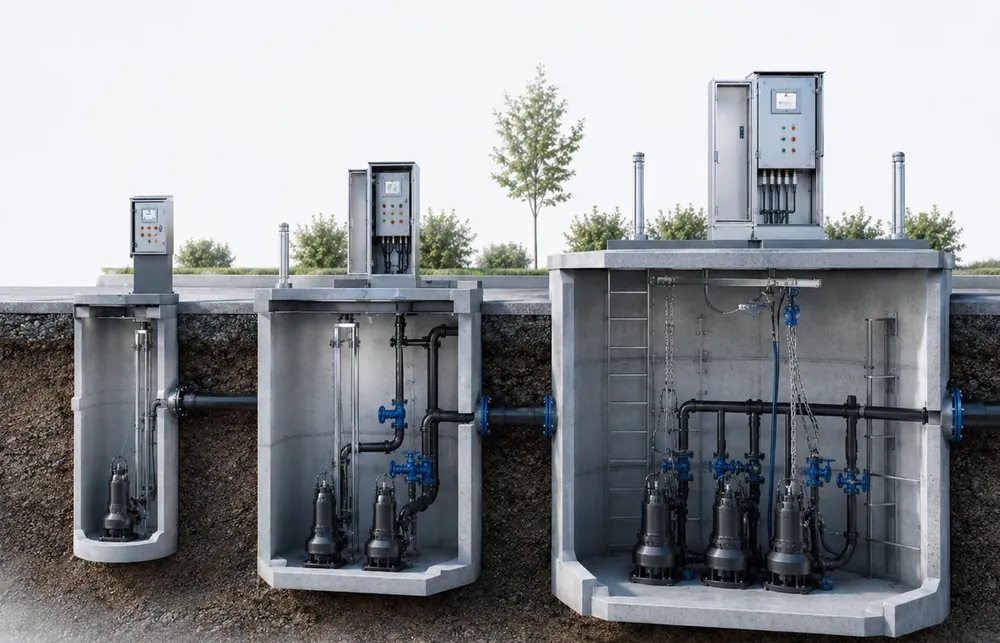
Pump Station Non-Return Valves are assessed around the pumped liquid, chamber type, pump duty, controls, alarms, floats, valves, rising main, ground conditions and access for future maintenance.
What pump station non-return valves are used for
Pump station non-return valves stop pumped flow returning to the chamber after the pump switches off.
Selection and site considerations
A failed or jammed non-return valve can cause repeat filling, pump cycling, loss of efficiency, backflow or a pump station that appears to run without emptying properly.
Repair, replacement and maintenance considerations
The correct approach depends on the age of the chamber, pump duty, condition of floats, valves, non-return valves, guide rails, control panel, alarms, rising main and access. Alton Pumps can support the pumping equipment and Alton Facility Services can support civils where excavation, chambers, pipework or reinstatement are required.
What to send before attendance
Useful information includes the site postcode, photographs of the chamber and control panel, pump model plates, alarm status, inlet depth if known, rising main route, discharge point, access restrictions, and whether the system handles foul sewage, grey water, surface water, rainwater or commercial wastewater.
How we can help
- Non-return valve checks
- Backflow and repeat filling
- Valve chamber considerations
- Rising main isolation valves
- Maintenance and replacement